
Faculty of Economics and Political Science, Cairo University
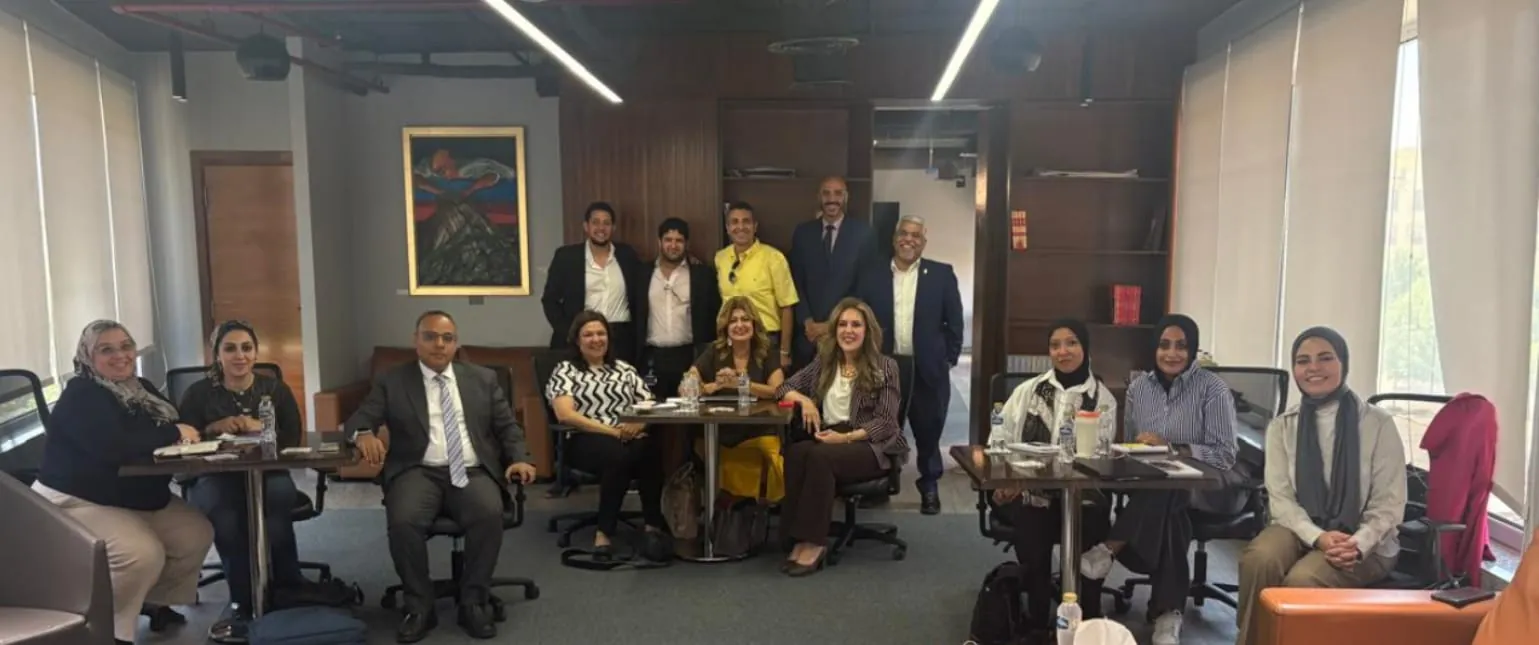
In partnership with Logic Consulting, Menova delivered "Mastering AI for Smarter Teaching" — a three-hour session in July 2026 — to faculty at Cairo University's Faculty of Economics and Political Science. The workshop taught verification-first prompting that exposes hallucinations before they reach academic work, applied POCAB to course design and GCSE-F to research synthesis, redesigned assignments for a world where students have AI, delegated course preparation to Claude Cowork, and grounded teaching content in the faculty's own sources with NotebookLM.
Last updated:
The challenge
FEPS faculty face the question every serious faculty now faces: students already have generative AI, detection is unreliable, and course preparation still consumes hours that could go to teaching and research. The faculty needed working methods — for their own productivity and for assessment that still measures learning — not a policy lecture.
The approach
- Delivered jointly with Logic Consulting for FEPS faculty members.
- Verification-first prompting from the first hour: exposing hallucinations and unsupported claims before they reach teaching or research output.
- POCAB applied to course design: tutorial and seminar questions written to a precise brief — audience, class size, prior knowledge, Egyptian examples, and what to flag.
- GCSE-F applied to research synthesis: evidence tables built only from the attached papers, one row per paper, "not stated" rather than inference, every cell cited.
- Assignment redesign live in the room: essay to structured debate, memorisation to principle-application on real Egyptian cases, arithmetic to AI-built models students must interrogate.
- Claude Cowork for course production: syllabus and reading pile to a 12-week outline with question banks; accreditation forms filled against the syllabus with an ILO matrix and gap list; a dataset turned into a complete stats lab — cleaned data, graduated worksheet, solutions with code shown.
- NotebookLM for grounding: teaching and writing anchored to the faculty's own sources, so every claim clicks back to a page.
The result
- Faculty left with working prompt patterns for tutorial questions, seminar discussion design and research synthesis — written for their own courses during the session.
- Assignment redesign patterns demonstrated on economics and politics material, from exchange-rate pass-through to democratic backsliding.
- A repeatable Cowork workflow for the heaviest course-preparation tasks, including draft feedback on anonymised scripts — with the academic owning every judgement.
A faculty workshop built on faculty work
“Mastering AI for Smarter Teaching” was designed around what university teaching actually consists of — tutorial questions, seminar design, reading lists, accreditation paperwork, datasets, marking — rather than around AI features. Logic Consulting partnered on the delivery; the room was FEPS faculty; the examples were economics and political science throughout.
Verification before anything else
Academic work has no tolerance for invented citations. The workshop’s first discipline was verification-first prompting: forcing the model to expose what is unsupported before any output enters teaching or research. That discipline then ran through everything else — the GCSE-F research-synthesis pattern requires “not stated” rather than inference and a citation for every cell of an evidence table.
Course design with POCAB, on real courses
Not “write me discussion questions” but a full brief: a teaching assistant persona, six tutorial questions on exchange-rate pass-through, a 50-minute tutorial of 25 mixed-ability students, no calculus, Egyptian examples from the last five years, and a flag on any question needing data the students do not have. Faculty then wrote the same pattern for their own modules — including a few-shot version that clones the style of two model seminar questions.
Assignments that survive students having AI
Three redesign patterns, demonstrated on real material: the 1,500-word essay becomes a structured debate where students use AI to draft both sides and then deconstruct what it produced; the memorisation question becomes principle-application on the Cairo bread market; the computation exercise becomes an AI-built demand model the student must interrogate — at what income level does elasticity flip sign, and what does that do to the subsidy bill?
The heavy lifting, delegated
The Cowork segment showed what changes when course preparation is delegated rather than assisted: a syllabus and reading pile returning as a 12-week outline with a question bank; an accreditation form filled against the syllabus with an ILO matrix and a gap list; fifteen disagreeing PDFs returning as a cited evidence table plus a two-page conflict memo; a raw dataset returning as a complete, ready-to-run stats lab — cleaned data with every cleaning decision stated, a graduated student worksheet, and solutions with the code shown. Draft feedback on anonymised scripts closed the loop, with the principle stated plainly: you edit, you own.
Talk to Ahmed
Every Menova programme is scoped to the client. Book a short call — or send the team size, seniority and objective — and you get a written proposal with agenda, duration and price within two working days.