70/30 hands-on to theory
90 minutes between live demonstrations
2 prompting frameworks, both Ahmed’s own
AR/EN Arabic delivery, English slides
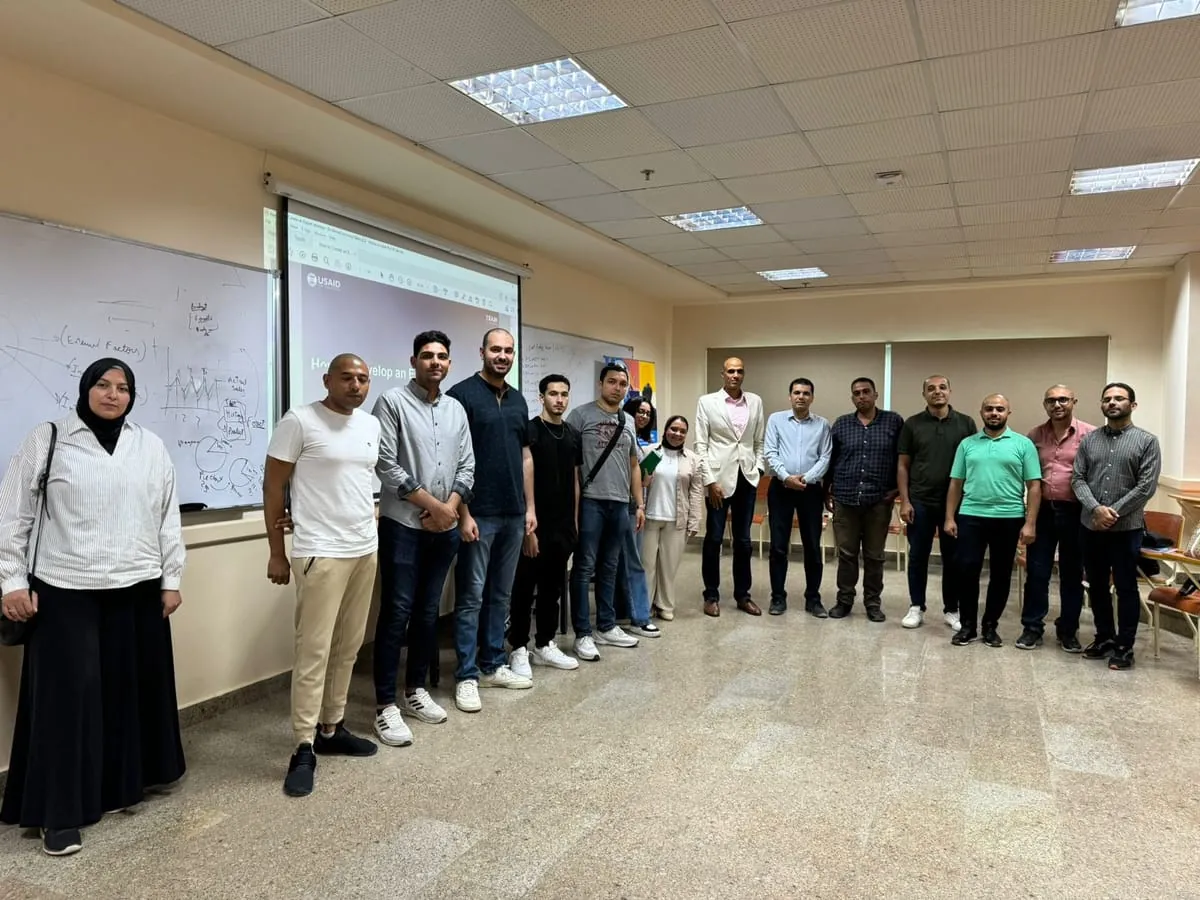
Ahmed Amrousy with participants at the close of a session
The close of a session — measured by what the room built, not by what was presented to it

Frameworks taught

Two tool-independent frameworks. The first structures a single prompt; the second structures work over documents and data.

POCAB

Persona · Objective · Audience · Context · Boundaries

Structures a single prompt so the model behaves like a named expert working to a defined brief.

P — Persona
Who should the model be?
O — Objective
What decision does this serve?
C — Context
What does it need to know first?
A — Audience
Who reads the output?
B — Boundaries
What is off-limits?

GCSE-F

Goal · Context · Source · Expectations · Format

Structures work over documents and data — the model must answer from a named source, not from memory.

G — Goal
What must be produced?
C — Context
What situation surrounds it?
S — Source
Which documents are authoritative?
E — Expectations
What does good look like?
F — Format
How should it be laid out?

Advanced prompting techniques

Taught in the executive and strategy programmes, where the cost of a wrong answer is higher.

Chain-of-thoughtChain-of-verificationSelf-critiqueTree-of-thoughtsExpert-panel

Tools covered

Demonstrated live on real data rather than in slides. Multiple tools on purpose, so a team can choose what fits its stack.

Claude
chat, Cowork and Fable 5
Microsoft Copilot
inside Microsoft 365
NotebookLM / Gemini Notebook
source-grounded research
ChatGPT
general reasoning and agents

Why “think with AI”

“I teach leaders how to think with AI — not how to use it.”

Tool training has a shelf life of about a quarter — interfaces change and features move. The ability to brief a model properly, ground it in a real source, and tell when the output is wrong does not expire. That is why the frameworks come first and the tools second.

Frequently asked questions

What is the POCAB framework?

POCAB stands for Persona, Objective, Context, Audience and Boundaries. It structures a single prompt so the model behaves like a named expert working to a defined brief. It is the right framework when the model is drawing on general knowledge rather than on your documents.

What is the GCSE-F framework?

GCSE-F stands for Goal, Context, Source, Expectations and Format. It structures work over documents and data. The Source element is what makes it work — it forces the model to answer from named material and to report gaps rather than fill them from memory.

When should I use POCAB rather than GCSE-F?

One test: is there a source the answer must come from? If yes, use GCSE-F. If no, use POCAB. Most prompting failures in a corporate setting are someone using POCAB when the task demanded GCSE-F.

What does 70/30 mean?

Seventy per cent of every session is hands-on and thirty per cent is theory. Theory appears only where it changes a decision. Participants spend most of the time working on tasks from their own week, on their own documents, with output reviewed live.

Why Arabic delivery with English slides?

It matches how most corporate teams in Egypt and the Gulf actually work. Participants ask real questions in the language they think in, while written material stays in the language of their systems and documents. There is no interpreter between the trainer and the room.

What is the "wow moment every 90 minutes"?

A deliberate demonstration, scheduled roughly every ninety minutes, in which a task that would normally take an afternoon is completed and verified in a few minutes — on the client’s own data, not a prepared example.

Which AI tools are used in the sessions?

Claude (chat, Cowork and Fable 5), Microsoft Copilot, NotebookLM / Gemini Notebook, and ChatGPT. Multiple tools are demonstrated so a team can see which fits its existing stack before committing budget.

Talk to Ahmed

Every Menova programme is scoped to the client. Book a short call — or send the team size, seniority and objective — and you get a written proposal with agenda, duration and price within two working days.